
Integrations

Integrations

Can I Use My Existing WhatsApp Number for WhatsApp API? (Complete 2026 Guide)

If you’re running a business and thinking about upgrading to WhatsApp API, one of the biggest questions is: Can I use my existing WhatsApp number for WhatsApp API without deleting my account? The short answer is: Yes, you can — but it depends on the provider and onboarding process. Many businesses lose chats, data, and customers because they are told they must delete their WhatsApp account first. In this guide, we’ll explain: Understanding the Difference: WhatsApp Business vs WhatsApp API Before migrating, it’s important to understand the difference between: WhatsApp Business App WhatsApp Business API (Official Platform) If you’re serious about WhatsApp marketing at scale, API is the correct solution. So… Can You Use the Same WhatsApp Number? YES, But With Proper Migration You can use your existing WhatsApp number for WhatsApp API, but: Some providers force you to: ❌ Delete your WhatsApp account permanently❌ Wait 24–48 hours❌ Risk losing chat history But with proper onboarding, migration can be smoother. When Do You Need to Delete the WhatsApp App? You must remove the number from the WhatsApp Business app before activating the API. That does NOT mean: It simply means the number shifts from app-based to API-based infrastructure. Common Problem Businesses Face “My provider says I must permanently delete my WhatsApp.” This usually happens when: Choosing the wrong provider can lead to: Official WhatsApp API Migration Process (Step-by-Step) Here’s how proper migration works: Step 1: Business Verification Your business must be verified inside Meta Business Manager. Step 2: Number Eligibility Check Check if your number: Step 3: Remove WhatsApp App Connection Temporarily disconnect the number from the app. Step 4: API Activation The number is activated on WhatsApp Business Platform. Step 5: Testing & Template Approval Message templates are submitted and approved. Once activated: Can You Use WhatsApp API Without Deleting Existing Number? Yes — if: No — if: What Happens to Old Chats? Important point: ⚠ Chat history from the mobile app does NOT automatically migrate to API dashboard. Before switching: Benefits of Using Same Number on WhatsApp API Changing number often reduces response rates by 30–40%. Who Should Migrate to WhatsApp API? You should consider API if: Industries that benefit most: Biggest Mistakes to Avoid ❌ Using cracked bulk software❌ Sending spam promotional messages❌ Skipping business verification❌ Choosing cheapest unofficial provider❌ Not warming up API number These can permanently block your number. Final Verdict: Should You Use Your Existing Number? If your number: ✔ Has clean reputation✔ Is important for brand trust✔ Has active customer base Then YES — migrate it properly to WhatsApp API. If your number: ❌ Has spam history❌ Frequently gets blocked Then starting with a fresh number may be safer. Frequently Asked Questions (FAQ Schema Ready) Q1: Can I use my personal WhatsApp number for WhatsApp API? No. It must be a business number not actively used in personal WhatsApp. Q2: Will I lose my contacts? No. Contacts stay in your phone. But chats won’t auto-transfer. Q3: How long does WhatsApp API activation take? Usually 24–72 hours depending on verification. Q4: Can I switch back to WhatsApp Business app later? Yes, but you must remove API connection first.
Integrations

Instant Broadcast vs AiSensy, Wati, DoubleTick, Gallabox, WANotifier & More — Which WhatsApp Marketing Tool Wins in 2026?

In 2026, WhatsApp marketing and automation platforms are no longer optional — they’re essential for businesses looking to automate communication, engage audiences, boost conversions, and scale rapidly. With so many players in the market — AiSensy, Wati, DoubleTick, Gallabox, WANotifier and more — choosing the right platform can feel overwhelming. That’s where Instant Broadcast stands apart. In this detailed comparison, we break down key features, pricing, use-cases, pros & cons, and why Instant Broadcast is the ideal choice for most businesses today. Key WhatsApp Marketing Platforms Overview Here’s a quick snapshot of the tools we compare: Platform WhatsApp API Support Broadcast Messaging Automation Chatbots CRM Analytics Pricing (Indicative) Instant Broadcast Yes 🚀 High Volume Advanced Built-in Yes Powerful Competitive AiSensy Yes Yes Yes Optional Paid Basic Standard ₹999+ / mo Wati Yes Yes Yes Yes CRM-focused Basic ₹2,499+ / mo DoubleTick Yes Yes Basic Basic CRM Limited ₹2,500+ / mo Gallabox Yes Yes Moderate Unlimited Yes Moderate ₹799+ / mo WANotifier Yes Yes Yes Yes CRM Good Competitive Instant Broadcast: Overview & Strengths Before diving into side-by-side comparisons, here’s what Instant Broadcast brings to the table: 1. True High-Volume Broadcasting Instant Broadcast is built from the ground up for bulk broadcasts — whether you’re sending 10,000+, 50,000+, or 100,000+ messages in a campaign. Campaign throughput, delivery reliability, and speed are optimized so you don’t wait hours for sends to complete. 2. Affordable Pricing & Transparent Billing Unlike many platforms that add hidden markups on WhatsApp messaging costs, Instant Broadcast provides transparent pricing without unexpected fees — keeping ROI predictable and controllable. 3. Integrated Business Tools Instant Broadcast includes: 4. User-First Experience Modern interface, intuitive campaign creation wizards, and plug-and-play WhatsApp API setup make Instant Broadcast fast to deploy — even for non-technical users. Instant Broadcast vs AiSensy AiSensy is a commonly recommended solution for WhatsApp automation and broadcasts. Feature Comparison Feature Instant Broadcast AiSensy Free Plan Yes/Competitive Free credits only Messaging Time FAST (10k < 20 min) Slower (1.5+ hrs) AI Tools Built-in Limited or add-on Broadcast Scheduling Unlimited Limited Transparency Clear pricing Markups on messages While AiSensy offers WhatsApp broadcasts and automation, Instant Broadcast outperforms in speed, transparent messaging costs, and reliability. Instant Broadcast wins for businesses needing high throughput, scalability, and accurate cost control. Instant Broadcast vs Wati Wati is another popular choice known for CRM-style interfaces. Feature Comparison Feature Instant Broadcast Wati CRM Tools Yes Yes (more basic) Chatbots Built-in Yes Team Inbox Yes Yes Pricing Competitive Higher starting cost Setup & Support Fast onboarding Longer onboarding cycles Wati has its merits in team CRM and channel management, but Instant Broadcast gives more automation value and better pricing efficiency — especially for campaigns that scale. Instant Broadcast vs DoubleTick DoubleTick focuses on mobile-first CRM and e-commerce flows. Feature Comparison Feature Instant Broadcast DoubleTick Mobile Apps Optional Yes Broadcast Limits High Limited in lower plans Pricing Monthly + transparent Annual & markup Campaign Analytics Advanced Basic DoubleTick’s strengths for small teams are real, but Instant Broadcast excels for advanced automation and cost predictability. Instant Broadcast vs Gallabox Gallabox emphasizes team collaboration and ticketing workflows. Feature Comparison Feature Instant Broadcast Gallabox Broadcasts High throughput Yes Automation Deep & flexible Moderate Pricing Competitive Mixed plans Ease of Use High Moderate Gallabox is well-suited for teams needing multi-agent workflows, but Instant Broadcast delivers more powerful automation and campaign management overall. Instant Broadcast vs WANotifier WANotifier is known for its transparent pricing and CRM features without markup on messaging fees. Instant Broadcast builds on this foundation by adding: Where WANotifier is a solid option for cost-conscious teams, Instant Broadcast is better for businesses that want powerful automation plus growth-focused analytics. Why Choose Instant Broadcast Over Others? Here’s what sets Instant Broadcast apart in 2026: 1. Better Performance Instant Broadcast is engineered for speed, scalability, and reliability, especially for large-scale WhatsApp campaigns. 2. Transparent Pricing No hidden markups, no surprise messaging fees — so you budget campaigns with complete clarity. 3. Unified Platform Broadcasting, automation, CRM, analytics, AI templates, message scheduling — all in one place. 4. Built for Growth Whether you’re a startup, agency, or enterprise, Instant Broadcast scales with your business — without having to switch tools. 5. Enterprise-Grade Analytics Actionable insights, conversion tracking, delivery performance, open rates — down to the message level. Final Verdict Best For Recommended Platform High-volume broadcasting Instant Broadcast CRM + WhatsApp sales Wati / Gallabox Simple WhatsApp automation AiSensy / WANotifier Mobile-first CRM DoubleTick But if efficiency, scalability, cost control, and automation depth matter most — Instant Broadcast is the modern market leader. Summary In 2026, WhatsApp marketing tools have proliferated, but not all are created equal. While platforms like AiSensy, Wati, DoubleTick, Gallabox, and WANotifier serve specific niches, Instant Broadcast unifies advanced automation, reliable broadcasts, transparent pricing, and deep analytics — making it the best overall choice for most businesses.

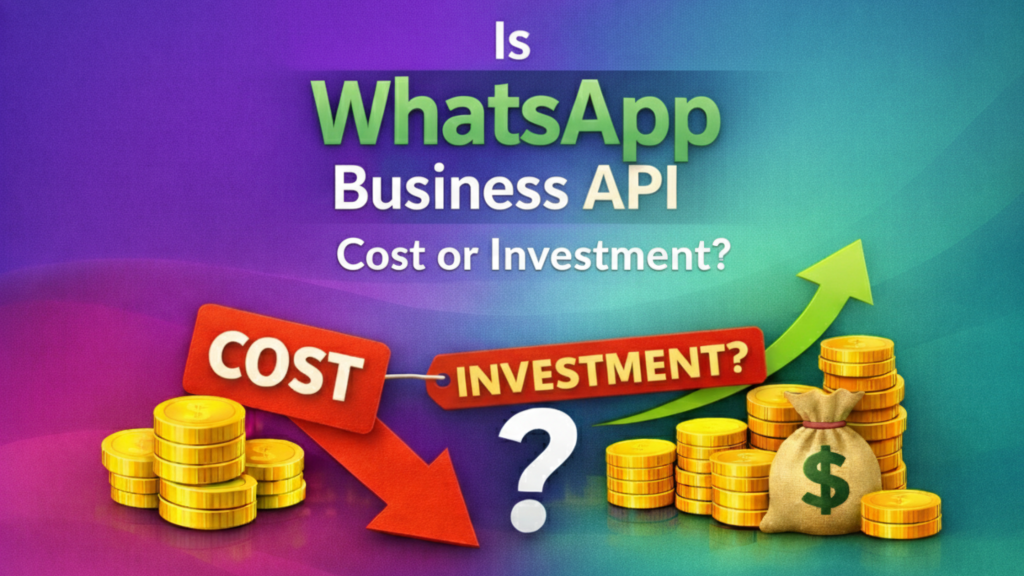
Is WhatsApp Business API a Cost or an Investment
Integrations

Is WhatsApp Business API a Cost or an Investment?

In today’s fast-moving digital world, businesses are constantly searching for smarter ways to communicate with customers. One question that often comes up is: “Is WhatsApp Business API just another cost, or is it actually an investment?” At first glance, WhatsApp Business API pricing may look like an expense. But when you understand its real impact on customer engagement, automation, and revenue growth, the perspective changes completely. Let’s break it down. Understanding WhatsApp Business API Pricing Many businesses hesitate because of pricing. WhatsApp Business API charges are typically based on: So yes—there is a cost involved. But cost alone doesn’t define value. Cost vs Investment: The Real Difference A cost is something that only consumes money.An investment is something that generates returns over time. Let’s see where WhatsApp Business API truly fits. Why WhatsApp Business API Is an Investment, Not a Cost 1. Higher Message Open Rates (Up to 98%) Email open rates average around 20–30%.WhatsApp messages? Over 90% are opened within minutes. That means: 📈 More visibility = higher conversion potential 2. Increased Sales & Revenue Growth With WhatsApp Business API, businesses can: Instead of cold marketing, you’re reaching users where they are already active. 💰 One well-timed WhatsApp message can generate more revenue than dozens of emails. 3. Customer Support Automation Saves Money Automation reduces: Using chatbots and workflows, you can: 📉 Lower operational costs over time 4. Builds Trust With Verified Business Accounts WhatsApp Business API offers: Customers trust verified businesses more, which leads to: Trust is not an expense—it’s an asset. 5. Improves Customer Experience & Retention Fast responses, proactive notifications, and personalized messages create a smooth experience. Happy customers: 🔁 Retention is always cheaper than acquisition. When WhatsApp Business API Might Feel Like a Cost To be fair, WhatsApp Business API may feel like a cost if: Like any tool, results depend on implementation. How to Maximize ROI From WhatsApp Business API To turn WhatsApp Business API into a true investment: When used strategically, ROI becomes clearly measurable. WhatsApp Business API for Different Industries WhatsApp Business API delivers value across industries: Each use case directly impacts efficiency and revenue. Final Verdict: Cost or Investment? 💡 WhatsApp Business API is NOT just a cost—it is a long-term investment. Businesses that treat it as an investment see measurable growth. Those who treat it as a cost miss its true potential. If you’re planning to scale your customer communication, automate workflows, and increase conversions, WhatsApp Business API is one of the smartest investments you can make today. 🚀 Start using our WhatsApp Business API the right way—and let your messages work for your business.

Whatsapp Api UseCase
Integrations

WhatsApp API Use Cases: 20 Ways to Boost Leads & Sales (2026)

In 2026, WhatsApp is no longer just a messaging app. For many businesses, it has become their highest-converting sales and lead generation channel. Why? Because customers respond faster on WhatsApp than email, SMS, or phone calls. And with the WhatsApp Business API, businesses can automate, personalize, and scale these conversations without spamming users. Below are 20 practical WhatsApp API use cases that businesses are using right now to generate more leads, more sales, and better conversions. 1.Click-to-WhatsApp Lead Generation Instead of sending users to long forms, businesses use Click-to-WhatsApp ads. The result? This alone has replaced traditional landing pages for many brands. 2.Automated Lead Qualification Once a user messages you, WhatsApp API can ask: This helps sales teams focus only on serious leads, saving time and effort. 3. Website Chat Replacement Many businesses replace website chat widgets with WhatsApp chat buttons. Why?Because users are more comfortable chatting on WhatsApp than on a website pop-up. 4.Product Catalog Sharing Inside Chat Businesses share: Directly inside WhatsApp, reducing friction and increasing buying intent. 5. Guided Selling Using Buttons Interactive buttons help customers: Less confusion = higher conversions. 6. Abandoned Cart Recovery If a customer leaves without completing a purchase, WhatsApp API sends a friendly reminder. These messages feel personal, not pushy — and recover lost sales effectively. 7. Instant Price Quotes Customers can request quotes and receive them instantly on WhatsApp, instead of waiting for emails or callbacks. This speeds up the sales cycle. 8. Appointment & Demo Booking Service-based businesses use WhatsApp API to: All inside one chat. 9. COD Order Confirmation For cash-on-delivery orders, WhatsApp verification reduces fake orders and delivery issues. 10. Payment Link Sharing Businesses send: Customers complete purchases without leaving WhatsApp. 11. Follow-Up Automation No more manual follow-ups. WhatsApp API automatically sends reminders to leads who haven’t responded — increasing close rates. 12. Personalized Offers & Discounts Offers based on: These perform far better than generic broadcasts. 13. 24/7 Automated Support WhatsApp API handles: Even when your team is offline. 14. Sales + Support Team Routing Chats can be automatically routed to: This keeps conversations organized and fast. 15. Re-Engaging Inactive Customers Businesses send helpful messages to users who haven’t interacted in a while — bringing them back into the sales funnel. 16. Upselling After Purchase After a purchase, WhatsApp API suggests: This increases average order value naturally. 17. Feedback & Reviews Collection Simple WhatsApp messages ask for: More responses than email surveys. 18. Event & Webinar Reminders WhatsApp reminders ensure higher attendance for: 19. Loyalty & Repeat Sales Campaigns Reward existing customers with: WhatsApp is perfect for retention. 20. Order & Delivery Updates Real-time updates build trust and reduce support tickets: Why WhatsApp API Converts Better Than Other Channels Simple reasons: That’s why WhatsApp marketing is dominating in 2026. Final Thoughts WhatsApp Business API is not just a messaging tool anymore. It’s a full-funnel growth channel. Businesses that use it correctly are:✔ Generating more leads✔ Closing sales faster✔ Improving customer experience✔ Reducing operational effort If your business depends on leads, sales, or customer conversations — WhatsApp API should be part of your core strategy in 2026.

Whatsapp api policy
Integrations

WhatsApp API 2026: New Policy Changes Explained

If you run a small or medium business in 2026, then WhatsApp Business API should be one of the first tools you consider for customer communication and sales growth. But this year, WhatsApp has introduced some big policy changes that you must know, especially if you want to use the WhatsApp API the right way without facing blocks or bans. In this blog, we’re going to explain: ✅ What the latest WhatsApp Business API policy changes are✅ What they mean for your business✅ How to stay compliant and grow faster in 2026 Let’s dive in! 🌟 What Is the WhatsApp Business API? Before we talk about policies, let’s quickly understand what WhatsApp Business API is. The WhatsApp Business API is the official way for businesses to: Unlike the regular WhatsApp Business app or unofficial bulk messaging tools, the API is built for professional business-to-customer communication. 🛠️ Important Policy Changes in WhatsApp Business API (2026) WhatsApp (owned by Meta) has updated its Business API policies with some significant changes that every business owner or marketer needs to understand. 1. Ban on General-Purpose AI Chatbots WhatsApp has updated its Business API policy to ban general-purpose AI chatbots like ChatGPT, Perplexity, and similar assistants from running on its platform starting January 15, 2026. What does this mean? If your business used ChatGPT or a generic AI assistant as the main AI chatbot via WhatsApp API, you can’t use it anymore after Jan 15, 2026. Meta wants WhatsApp API to be used for business communication and support — not as a platform for broader AI services. However:✔ Structured automated bots for support, booking, sales or order tracking are still allowed.So if you’re using automation to answer FAQs or send updates — you’re fine. This change is crucial for small businesses that rely on bots for customer support or engagement. 2. Focus on Compliance and User Experience The new policy clearly reflects that WhatsApp wants the API to be used only for real business-to-customer communication, not as a place to run AI tools that feel like standalone ChatGPT-style applications. Why? 3. Pricing & Billing Changes (2026 Grey Areas) Although not directly a policy rule, pricing and billing changes are also rolling out in 2026 that may affect your cost of using WhatsApp Business API: This means WhatsApp marketing, support messages, and automation will need to be planned more carefully so you manage cost and ROI. 💡 What These Policy Changes Mean for Your Business Let’s break it down into simple points: 1. No More Generic AI Assistants on WhatsApp If you were planning to use ChatGPT or similar AI as your WhatsApp chatbot as the main feature, that won’t work anymore starting Jan 15, 2026. Instead, focus on: These are still fully allowed and useful. 2. Structured Automation Is Safe If your automation is about helping customers with business tasks — like: Then you won’t have issues with policy enforcement. The API still lets you automate these in smart, compliant ways. 3. Your Compliance Matters More Than Ever WhatsApp is tightening how the API can be used. If you: … then your API access might be restricted or blocked. So always: Final Thoughts: 2026 is shaping up to be the year WhatsApp Business API becomes even more professional and purpose-driven. Here’s the takeaway:

Integrations

Top Reasons to Use WhatsApp Business API for Support & Sales in 2026

Let’s be real for a moment. In 2026, customers don’t want to wait.They don’t want long emails, support tickets, or “we’ll get back to you in 24 hours.” They want instant replies, simple conversations, and quick solutions. And that’s exactly why WhatsApp Business API has become the #1 channel for customer support and sales. If your business is still relying only on email, calls, or basic chat widgets — you’re already behind. Let’s break down why WhatsApp API is winning in 2026. Customers Are Already on WhatsApp This is the biggest reason. Your customers: Instead of forcing users to: You meet them where they already are — WhatsApp. That’s why WhatsApp marketing and WhatsApp customer support are growing so fast. What Is WhatsApp Business API (In Simple Words)? The WhatsApp Business API is the official way for businesses to: Unlike normal WhatsApp or bulk messaging tools, the API is: Why WhatsApp API Is Perfect for Customer Support 1.Instant Responses = Happy Customers With WhatsApp API, you can: Even a simple “Hi, we’re checking this for you” message makes a huge difference. Fast replies = better customer experience. 2. One Chat, Full Conversation History Unlike calls or emails: This makes WhatsApp API customer support smooth and stress-free. 3.Automation Without Sounding Robotic In 2026, automation is not optional. With WhatsApp Business API automation, you can: And the best part?It still feels like a normal WhatsApp chat. Why WhatsApp API Is a Sales Machine in 2026 Now let’s talk money 💰. 4.Higher Open & Conversion Rates Emails get ignored.SMS feels outdated. WhatsApp messages?👉 90%+ open rates When you send: People actually see and respond. That’s why WhatsApp API for sales works so well. 5.Turn Conversations Into Conversions With WhatsApp API, sales is not pushy — it’s conversational. You can: No redirection. No friction. This is called conversational commerce, and it’s booming in 2026. 6.Perfect for Lead Follow-Ups Got leads from: You can automatically: That’s why WhatsApp Business API is becoming the top channel for lead conversion. Industries Winning with WhatsApp Business API WhatsApp API is not limited to one industry. It works for: Anywhere conversations matter — WhatsApp API fits. Final Thoughts: In 2026, the businesses growing fastest have one thing in common: They communicate fast, simple, and personally. That’s why WhatsApp Business API is no longer “optional”. It’s a must-have channel for: If you want: Then WhatsApp Business API should be your #1 business channel.

Integrations

WhatsApp API vs Bulk Messaging: What Works in 2026?

If your business is using WhatsApp to talk to customers, chances are you’ve heard these two terms a lot: But the big question in 2026 is 👉 which one actually works better?Which one gives replies, conversions, and long-term growth — and which one gets your number blocked? First, What Is Bulk WhatsApp Messaging? Bulk WhatsApp messaging usually means: It sounds attractive because: But here’s the reality in 2026 👇 ❌ Problems with Bulk WhatsApp Messaging Many businesses still use it, but most of them ask the same question later:“Why did my WhatsApp number get blocked?” What Is WhatsApp Business API? The WhatsApp Business API is the official and approved way to send messages on WhatsApp at scale. It is designed for: With WhatsApp API, you can: In short — it’s built for long-term WhatsApp marketing. WhatsApp API vs Bulk Messaging: Quick Comparison Feature WhatsApp Business API Bulk Messaging Official & Legal ✅ Yes ❌ No Account Safety ✅ Very High ❌ Very Risky Automation ✅ Yes ❌ No Personalization ✅ Yes ❌ No Two-way Chat ✅ Yes ❌ Mostly One-way Analytics & Reports ✅ Yes ❌ No Suitable for 2026 ✅ 100% ❌ Not Recommended What Actually Works Better in 2026? Let’s be honest. 🚀 WhatsApp API clearly wins in 2026 Why? Because WhatsApp has become strict. Bulk messaging may give short-term reach, but WhatsApp API gives long-term results. Why Businesses Are Switching to WhatsApp API in 2026 Here’s what we’re seeing across industries 1. Better Open & Reply Rates WhatsApp messages already have 90%+ open rates, but API messages get real replies, not just views. 2. Automation That Feels Human With WhatsApp API, you can: 3. Zero Fear of Ban Since it follows WhatsApp policies, your number stays safe. 4. Works Perfectly with Marketing & Sales You can connect the WhatsApp API with: This is why WhatsApp marketing is exploding in 2026. Is Bulk WhatsApp Messaging Completely Dead? Not fully — but it’s dangerous. Bulk messaging might still work for: But for serious businesses, bulk WhatsApp messaging is not future-proof. Final Thoughts: In 2026, WhatsApp is no longer just a chat app — it’s a business communication platform. Businesses that adapt to: …are winning. Those still using bulk WhatsApp messaging are slowly disappearing. If you’re serious about WhatsApp marketing, WhatsApp automation, and business growth, the choice is clear.

Integrations

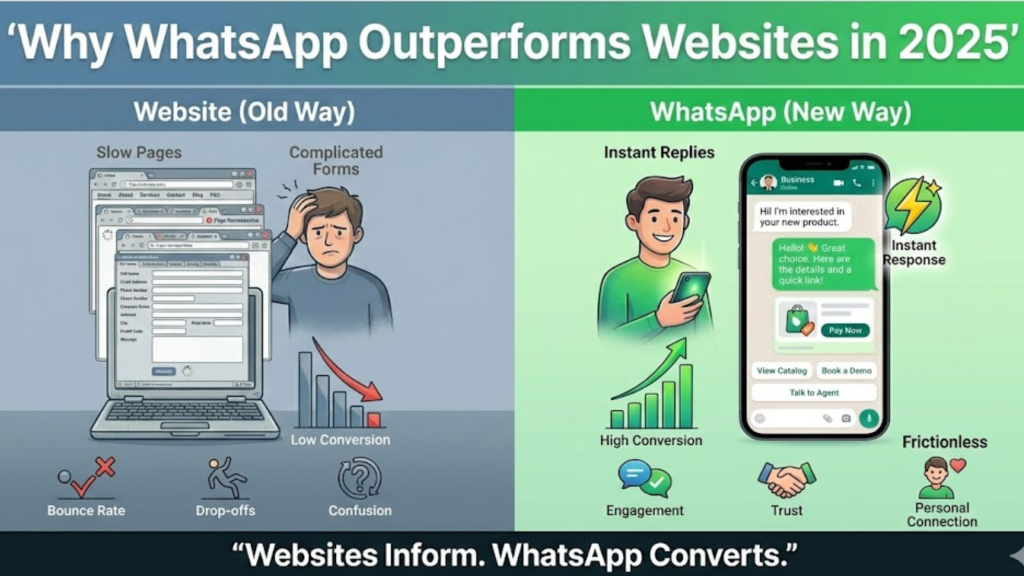
Why WhatsApp Outperforms Websites in 2025

For years, businesses obsessed over websites — Landing pages, funnels, CTAs, heatmaps, A/B tests. But in 2025, something unexpected happened… Customers stopped waiting. Stopped browsing. Stopped filling forms. Stopped clicking around. They want instant answers, instant offers, instant trust — and nothing does that better than WhatsApp. Here’s the truth: WhatsApp is outperforming websites in almost every business metric. And the numbers don’t lie. WhatsApp Wins Because Attention Spans Are Dead A website needs scrolling, reading, navigating, understanding. WhatsApp needs… a message. That’s it. In 2025: They want a human conversation, not a digital maze. WhatsApp offers it instantly. Websites don’t. 98% Open Rate vs. 1–2% Website Conversion Rate This is the biggest difference. People respond to chat faster than they click buttons. Simple psychological reality. WhatsApp Builds Trust Faster Than Any Website A website is a brochure. WhatsApp feels like a relationship. Trust triggers on WhatsApp: One conversation in WhatsApp = more trust than 10 website visits. WhatsApp Removes the “Friction” of Buying A website has: WhatsApp has: 👉 “Send me the details.” 👉 “Send payment link.” 👉 “Done.” That’s why chat commerce (C-commerce) exploded in 2025. Your customer buys inside the chat — without visiting a single webpage. 24/7 AI Chat Agents Beat Any Website FAQ Websites have FAQs nobody reads. WhatsApp has AI agents that answer instantly. AI on WhatsApp can: The convenience is unbeatable. WhatsApp Works Even When Customers Don’t Trust Websites In India especially, users hesitate to: But everyone trusts WhatsApp. It’s familiar, safe, personal. Trust = conversions. WhatsApp Keeps the Customer Forever Websites lose customers after one visit. WhatsApp never loses them. Once a customer chats with you: WhatsApp = lifetime relationship Website = one-time visit Final Verdict: Websites Inform. WhatsApp Converts. In 2025, the fastest-growing brands understand one thing: Your website is where people check you. Your WhatsApp is where people buy from you. Businesses still depending only on websites are losing traffic, leads, and conversions silently. Businesses using WhatsApp as their primary marketing + sales + support engine are growing faster than ever.

Integrations

Top WhatsApp Marketing Trends Shaping 2025: What Businesses Must Know

WhatsApp is no longer just a messaging app — it has become a full-fledged marketing, automation, and customer-retention engine. With over 2.7 billion active users, brands across India are shifting from slow, manual communication to instant, conversational, AI-driven experiences. As 2025 unfolds, these WhatsApp marketing trends are transforming how businesses attract, convert, and retain customers. 1. WhatsApp Becomes a Paid Broadcasting Platform WhatsApp has officially moved from “free broadcasting limits” to a paid messaging ecosystem. This means: Trend Insight: Brands are shifting from random blasts to intent-based broadcast segments: The future: Smarter, targeted, data-backed broadcasting. 2. AI-Powered WhatsApp Assistants Are Replacing Human Agents AI chatbots now handle: With 24/7 instant replies becoming the new normal, brands using automation are: Trend Insight: AI won’t replace humans — Businesses using AI will replace businesses who don’t. 3. WhatsApp Shops & Catalog Commerce Are Exploding People prefer buying where they already chat. WhatsApp is pushing: This trend is especially strong for: 2025 is the rise of “Chat Commerce” — customers buy without visiting the website. 4. Hyper-Personalized Messaging Beats Generic Broadcasts AI-driven segmentation now allows brands to send: 58% of customers say they purchase faster when brands send relevant messages. Trend Insight: Personalization = higher conversions = lower cost per acquisition. 5. WhatsApp Becomes the New CRM In 2025, CRM is not just emails and spreadsheets — Your CRM is now your WhatsApp. Businesses now manage: All inside WhatsApp or via integrated dashboards. This gives businesses: 6. Voice Notes & Multimedia Marketing Are Taking Over Customers love: Engagement rates are 3× higher vs text messages. Trend Insight: 2025 belongs to “visual + conversational” messaging. 7. Automation + Human Handoff = Best Conversions Smart brands use a hybrid flow: This combo: Especially effective for: 8. WhatsApp Community Building is Growing Fast Communities allow: Brands use communities as micro-audiences with 100% delivery (unlike social media algorithms). 9. Data-Driven WhatsApp Marketing Takes Center Stage Brands now track: In 2025, marketing decisions are data-first, not guesswork. Final Takeaway WhatsApp marketing is no longer limited to “sending messages.” It’s a complete ecosystem: AI + Automation + Personalization + Commerce + Broadcasting. Businesses adopting these trends early will enjoy: WhatsApp is not the future — It is the present.

Integrations

WhatsApp Marketing Is Not the Future — It’s the Present. And Most Businesses Are Still Sleeping On It.

Let’s be honest. Brands have spent years obsessing over: But the highest-converting channel was sitting right in front of us the whole time: WhatsApp. Today, customers don’t want long forms. They don’t want 7-step funnels. They don’t want “We’ll get back to you in 24 hours.” They want instant replies. Instant trust. Instant solutions. And that’s exactly why WhatsApp Marketing is exploding in 2025. The New Reality: Customers Buy in Chats, Not on Websites People don’t open emails. People skip ads. People ignore SMS. But they ALWAYS open WhatsApp. And they reply faster there than anywhere else. WhatsApp has become: the new storefront, the new support desk, the new sales engine… all in one place. What’s REALLY Trending in WhatsApp Marketing (Not the usual advice) Conversation-first funnels are replacing landing pages Brands are directly sending leads into WhatsApp → nurturing → converting inside the chat. No friction. No drop-off. Broadcasts are the new ‘push notifications’ 1 message → 5000+ people → instant traffic, instant sales. Better than emails, cheaper than ads. AI-driven WhatsApp Assistants Businesses now use AI chatbots to: 24/7 — fully automated. WhatsApp = the fastest conversion channel The journey is now: Message → Conversation → Conversion … instead of the old 8-step funnel. Personal brand + WhatsApp = A cheat code Coaches, creators, freelancers are building private WhatsApp communities… …and selling out in HOURS, not weeks. The Harsh Truth If your business is not using WhatsApp Marketing, you’re losing: Every brand is fighting for attention. Only a few are using the channel where attention ACTUALLY exists. 2025 Strategy That’s Going Viral Right Now Here’s the latest trend top-performing brands are using: Ads → WhatsApp → Automated Chat → Personalized Offer → Instant Sale This reduces cost per lead, increases response rate, and boosts conversions — FAST. WhatsApp isn’t “just another channel.” It’s becoming the core of the customer journey. Final Thought If you want to scale in 2025, ask yourself: Your answer will decide your growth. If you want a plug-and-play WhatsApp Marketing System (broadcast + automation + copy + setup), DM me “WHATSAPP 2025” and I’ll share the complete blueprint. #WhatsAppMarketing #ChatCommerce #DigitalMarketing2025 #MarketingTrends #BusinessGrowth #MarketingAutomation #InstantBroadcast #LeadGeneration #BrandBuilding #D2CMarketing

Scroll to Top